
 Game Reviews
 Mobile Games
 Game Online
 Game Updates
 AI & Artificial Intelligence
 AI News
 AI Comparisons
 AI Tools Reviews
Introduction
The rapid growth of artificial intelligence has significantly changed how digital content is produced, especially in animation and motion design. One of the most promising technologies in this space is Seedance 2.0, a platform designed to automate motion creation and animation workflows using advanced machine learning techniques. Unlike traditional animation tools that rely heavily on manual keyframing, Seedance 2.0 enables creators to generate dynamic motion sequences through simple instructions and structured prompts.
In the past, producing high-quality animation required specialized skills and long production cycles. However, the introduction of tools like Seedance 2.0 has reduced these barriers by enabling automated motion synthesis. This shift allows designers, marketers, and developers to create engaging animations without extensive technical training. As a result, Seedance 2.0 is becoming increasingly relevant in industries that demand fast visual production.
Another reason behind the rising interest in Seedance 2.0 is its ability to integrate seamlessly into modern digital pipelines. From social media marketing to game development, motion content plays a central role in audience engagement. By automating repetitive animation tasks, Seedance 2.0 supports faster content delivery while maintaining consistent quality.
See more: https://prol5review.com/home
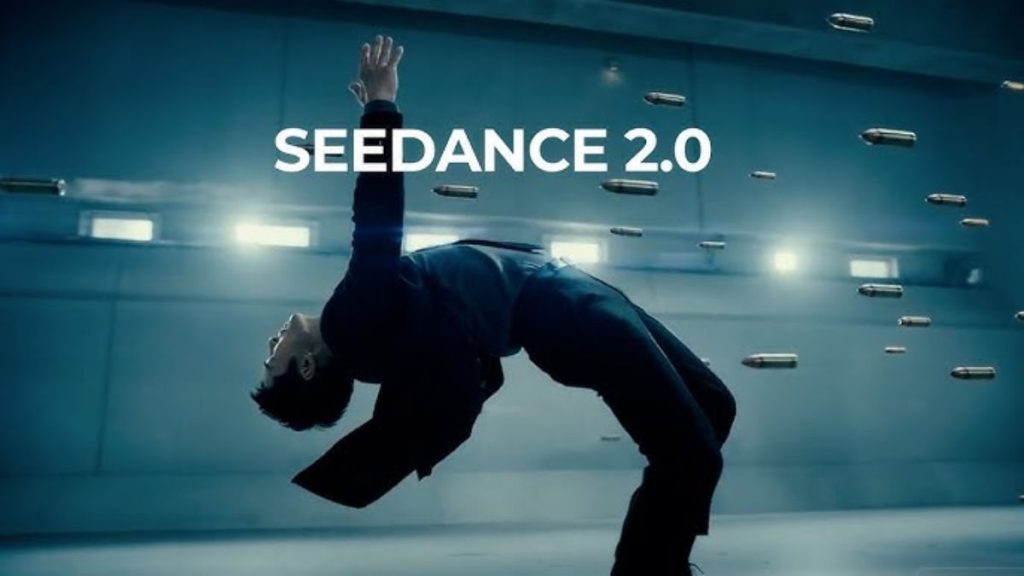
The Evolution Leading to Seedance 2.0
The journey toward Seedance 2.0 began with early animation software that required manual input for every movement. Animators spent hours adjusting individual frames, which made production slow and expensive. Over time, automation tools introduced preset motion libraries, but these lacked flexibility. The arrival of Seedance 2.0 represents the next stage in this evolution, where AI-driven motion replaces rigid templates.
One of the major breakthroughs that enabled Seedance 2.0 was the advancement of neural motion modeling. These models analyze large datasets of real-world movements, allowing the system to understand how objects and characters behave naturally. Through this process, Seedance 2.0 learned to generate motion patterns that resemble human-created animation.
Another factor contributing to the development of Seedance 2.0 is the increasing demand for short-form video content. Platforms focused on visual storytelling require frequent updates, making manual animation inefficient. By automating motion creation, Seedance 2.0 supports the growing need for rapid content production.
Understanding the Core Technology of Seedance 2.0
At the technical level, Seedance 2.0 relies on deep learning algorithms capable of predicting motion sequences based on contextual instructions. Instead of manually defining each movement, users provide structured prompts, and Seedance 2.0 calculates the motion flow automatically.
One of the defining features of Seedance 2.0 is its motion interpolation capability. This process generates smooth transitions between frames, eliminating abrupt movement changes. By refining motion paths continuously, Seedance 2.0 creates animations that appear natural and visually appealing.
Additionally, Seedance 2.0 incorporates physics-based simulation models. These models ensure that generated movements follow realistic patterns such as gravity, momentum, and object interaction. This combination of physics and AI enhances the credibility of animated scenes.
Prompt-Based Motion Creation with Seedance 2.0
One of the most innovative aspects of Seedance 2.0 is its prompt-driven workflow. Instead of drawing each frame manually, users describe motion objectives using text or structured inputs. Seedance 2.0 interprets these instructions and generates corresponding animations.
Another advantage of prompt-based motion creation in Seedance 2.0 is flexibility. Users can experiment with different prompts to explore multiple animation styles. This iterative process encourages creativity while reducing production time.
Furthermore, Seedance 2.0 supports layered prompts, allowing users to control multiple motion elements simultaneously. For example, users can define character movement, camera motion, and environmental effects within a single instruction sequence.
Enhancing Animation Quality with Seedance 2.0
Quality remains a crucial factor in motion design, and Seedance 2.0 addresses this through advanced refinement techniques. The platform continuously adjusts motion speed and direction to maintain smooth transitions. This results in animations that appear fluid rather than mechanical.
Another important feature of Seedance 2.0 involves adaptive motion correction. If a generated sequence contains inconsistencies, the system automatically recalculates movement patterns. This ensures that animations maintain visual coherence across frames.
Additionally, Seedance 2.0 supports high-resolution output, making it suitable for professional use. Whether generating short clips or complex animations, the system maintains consistent quality throughout the production process.
Applications of Seedance 2.0 Across Creative Fields
The versatility of Seedance 2.0 makes it valuable across multiple industries. In marketing, businesses use motion graphics to capture audience attention quickly. By generating animated advertisements, Seedance 2.0 reduces production costs and accelerates campaign timelines.
Another major application of Seedance 2.0 appears in the gaming industry. Developers can create motion prototypes for characters and environments before implementing them into full game engines. This rapid visualization improves design efficiency.
Educational institutions also benefit from Seedance 2.0 by creating animated learning materials. Visual demonstrations improve comprehension, particularly in subjects that require step-by-step explanations.
Workflow Efficiency and Automation with Seedance 2.0
Automation lies at the heart of Seedance 2.0, enabling creators to handle complex tasks with minimal manual input. By automating repetitive motion design processes, the system significantly reduces workload and increases productivity.
Another efficiency advantage of Seedance 2.0 involves real-time preview capabilities. Users can view generated animations instantly and make adjustments without restarting the workflow. This interactive approach speeds up production cycles.
Furthermore, Seedance 2.0 supports batch processing, allowing multiple animation sequences to be generated simultaneously. This capability is particularly useful for projects requiring large volumes of motion content.
Comparing Seedance 2.0 with Traditional Animation Tools
Traditional animation tools require detailed technical knowledge and significant manual effort. In contrast, Seedance 2.0 simplifies the process by automating motion generation. This reduces the learning curve for new creators.
Another difference lies in scalability. Traditional workflows often slow down as project complexity increases. However, Seedance 2.0 handles large datasets efficiently, making it suitable for high-volume production environments.
Despite these advantages, traditional tools remain important for specialized customization. While Seedance 2.0 accelerates motion creation, human designers still play a key role in refining artistic details.
Challenges and Limitations of Seedance 2.0
Although Seedance 2.0 offers impressive capabilities, certain limitations remain. Generating highly complex interactions between multiple moving elements can still be challenging. Some scenes may require manual adjustments to achieve precise results.
Another limitation of Seedance 2.0 involves computational requirements. High-quality motion synthesis demands significant processing power, especially for large-scale projects.
Additionally, maintaining stylistic consistency across long animation sequences can be difficult. Continuous improvements in training models are necessary to overcome these challenges.
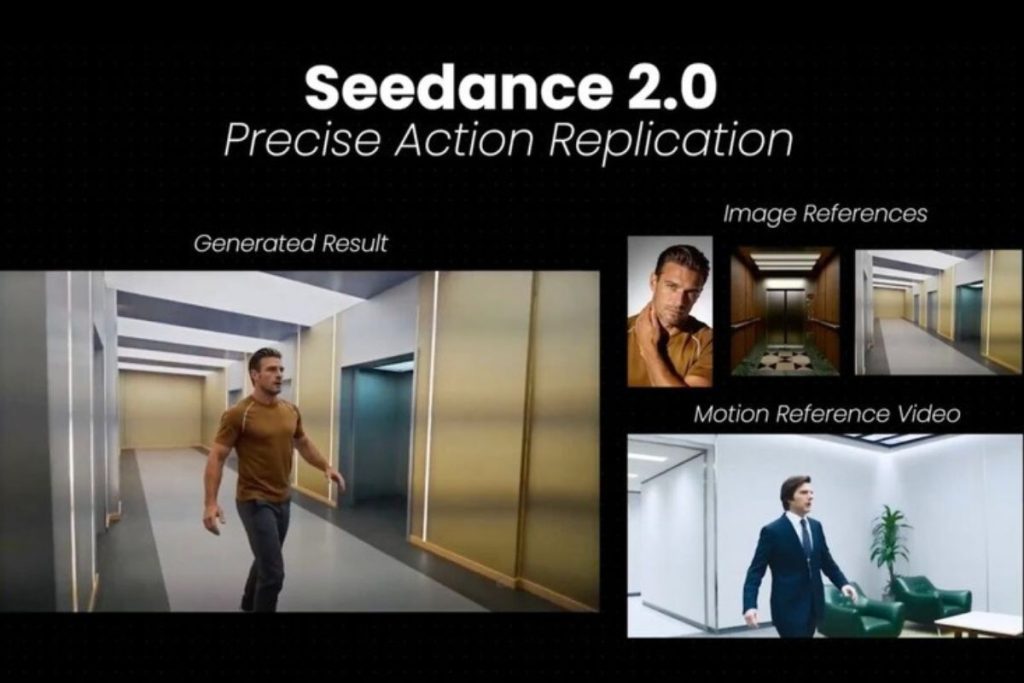
The Future of Motion Design with Seedance 2.0
Looking ahead, Seedance 2.0 is expected to play an important role in shaping the future of animation technology. As AI models improve, motion generation will become faster and more accurate. This will allow creators to produce complex animations in real time.
Another promising development involves integration with virtual reality and augmented reality systems. By combining immersive environments with AI-generated motion, Seedance 2.0 could redefine interactive storytelling.
Furthermore, ongoing research may enable Seedance 2.0 to generate entire animation sequences automatically. This would transform animation production into a highly efficient and accessible process.
Conclusion: The Impact of Seedance 2.0 on Modern Animation
The introduction of Seedance 2.0 marks a significant step forward in automated motion design and animation workflows. By simplifying complex animation tasks, Seedance 2.0 empowers creators to focus on storytelling rather than technical challenges.
As industries continue adopting AI-powered tools, Seedance 2.0 will likely become an essential component of digital production pipelines. Its ability to automate motion generation and enhance workflow efficiency positions it as a key technology for the future of animation.
Ultimately, Seedance 2.0 demonstrates how artificial intelligence can transform motion design into a faster, smarter, and more accessible creative process.
Follow us on Facebook: https://www.facebook.com/share/1CFA8qxACT/